Pregnancy
Fetal development
How your baby grows from a single cell to a newborn — and what to do at each stage. Plain-language guides drawing on ACOG, the Mayo Clinic, and the NHS.
5 live

How growth is measured, and what the numbers mean
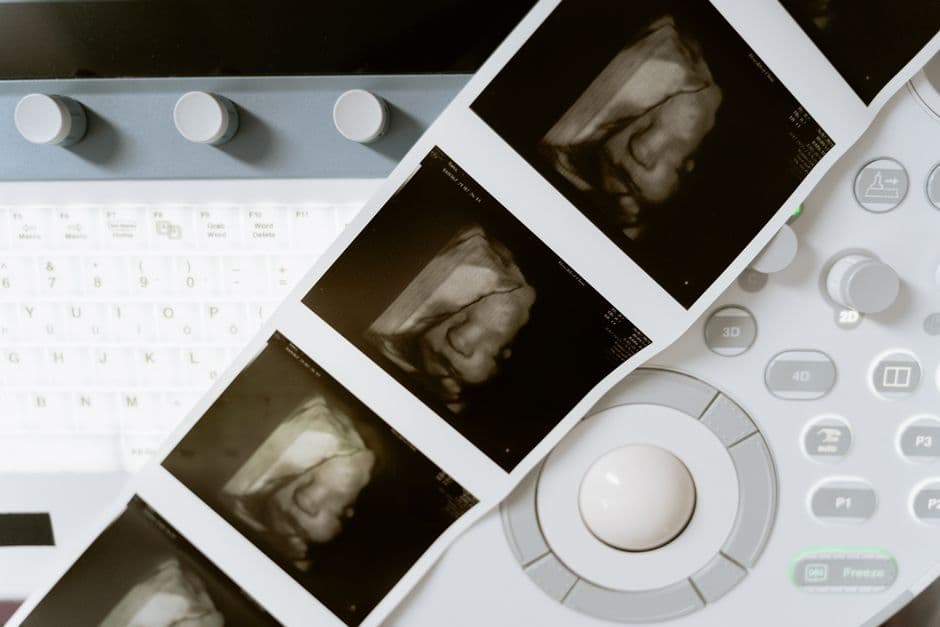
Almost everything you will be told about how the baby is growing comes from a handful of measurements taken on a scan, and knowing what they are makes the results much less alarming to read.
Early on it is a single length, crown to rump, because at that stage every baby grows at close to the same rate — which is exactly why an early scan dates a pregnancy better than the calendar does. Later the measurements separate out: the width and circumference of the head, the circumference of the abdomen, and the length of the thigh bone. Combined, they produce an estimated fetal weight.
That estimate carries a wide margin, commonly in the region of ten to fifteen per cent either way. On a baby estimated at three kilograms, that is a span of several hundred grams. An estimate is genuinely useful for spotting a trend across scans, and much weaker as a prediction of the number on the scales on the day, which is why a late scan suggesting a big baby is a reason for a conversation rather than a conclusion.
Percentiles describe a population, not a verdict. A baby on the tenth centile who is growing steadily along the tenth centile is usually a small baby who is well. A baby who was on the fiftieth and has dropped to the fifteenth is the pattern that gets attention, even though the second number still sounds unremarkable. The trend is what is being watched.
A simple daily habit that lets you spot meaningful changes in your baby's movement — and one of the most useful things you can do in the third trimester.

What happens between fertilization and the first missed period — the most important biological setup of the entire pregnancy, packed into roughly 14 days.

One clear picture of how your baby grows week by week in the first trimester — from a single fertilized cell to a fully formed, inch-long body with a beating heart.

A clear guide to what happens between week 13 and week 27 — including when you'll likely feel movement, what the anatomy scan checks, and which symptoms need a same-day call.

This article settles what's actually happening inside your body week by week in the third trimester — your baby's growth, brain and lung maturity, movement, and position — and exactly which symptoms mean it's time to call your provider.
Related
Looking for week-specific information instead of an overview? Browse the week-by-week pregnancy guide — each week has its own page with what's happening, common symptoms, and what to do.
Have feedback or spotted something wrong? Email us at hello@babybumpkit.com.