Overview: three stages
Medically, labor is divided into three stages. The first stage is the longest and is itself divided into early labor, active labor, and the transition phase — it's when your cervix dilates and effaces. The second stage is pushing and the actual birth of the baby. The third stage is the delivery of the placenta, which happens shortly after the baby is born.
Total time varies enormously. First-time labors average 12–18 hours but can be much shorter or longer; subsequent labors are typically faster. The stages overlap in practice — the boundaries between them aren't always clean.
What follows is a typical timeline. Your labor may not match it exactly; that's normal. Your provider will guide you based on what your body and baby are actually doing.
Early labor (first stage, early phase)
Early labor starts when contractions become regular and the cervix begins to dilate (open) and efface (thin out). Contractions in this phase are typically mild to moderate, last 30–60 seconds, and come every 5–20 minutes. The cervix opens from 0 to about 6 cm during this time.
Early labor is usually managed at home unless your provider has told you to come in sooner (which can happen for VBAC, certain medical conditions, or if your water has broken). The standard guidance is the 5-1-1 rule: come to the hospital when contractions are 5 minutes apart, lasting 1 minute, for 1 hour straight.
Things that help during early labor: walking, hot showers, eating light meals while you can, rest if you can, and tracking contractions casually rather than obsessively. Eat and hydrate normally — once you're in active labor, eating may be restricted at the hospital.
Active labor (first stage, active phase)
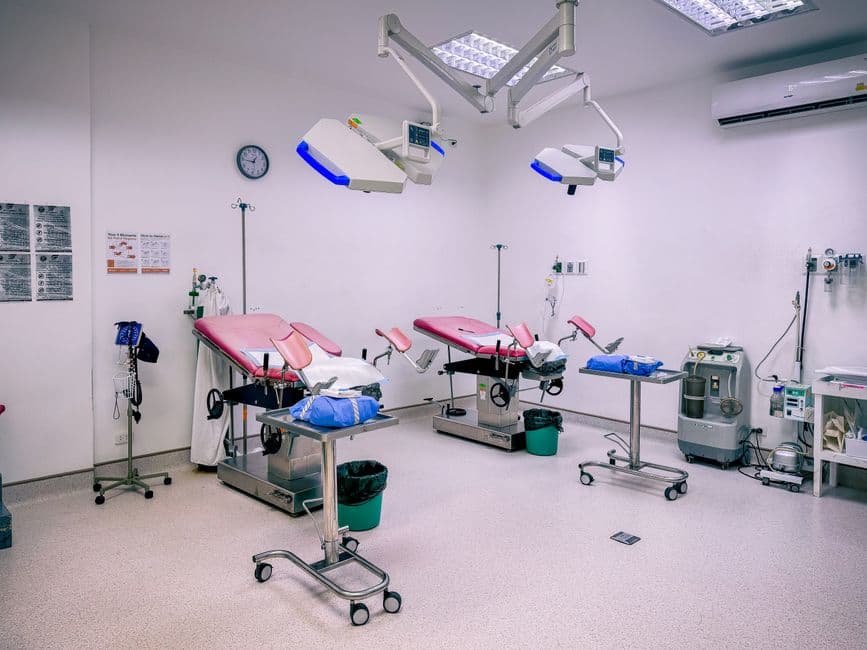
Active labor starts around 6 cm dilation and progresses to 10 cm (fully dilated). Contractions are stronger, longer (60–90 seconds), and closer together (3–5 minutes apart). The cervix opens at roughly 1 cm per hour during active labor for first-time births; faster for subsequent births.
This is when most people go to the hospital or birth center if they haven't already. Pain management decisions become more pressing here — an epidural can be placed at almost any point during active labor, but the typical window is 6–8 cm.
Active labor is also when your support team becomes most useful. Counterpressure on the lower back, position changes (often every 30 minutes), breathwork, and just having a calm presence in the room all help.
Transition (first stage, final phase)
Transition is the last 1–2 hours of the first stage, as the cervix moves from about 8 cm to 10 cm. It's the most intense part of labor for most people. Contractions are very strong, very close together (2–3 minutes apart), and can stack on top of each other with little break in between.
Many people experience transition with shaking, nausea, the urge to throw up, and a feeling of 'I can't do this' — which is sometimes actually a useful sign that you're close to fully dilated. It's short relative to everything else, but it's the toughest stretch.
Once you reach 10 cm, the cervix is fully dilated and you move to the second stage. Most providers want you to feel the urge to push (the body's natural cue) before starting; sometimes you'll need to wait a bit even after full dilation for the baby to descend.
Pushing and birth (second stage)
The second stage begins at full dilation and ends with the birth of the baby. Length varies hugely: anywhere from a few minutes to several hours. Two hours is a common average for first-time births; under an hour is typical for subsequent births.
Pushing can be done in many positions: lying back (often what hospitals default to), squatting, on hands and knees, side-lying, or using a peanut ball. Position changes can help when progress slows.
When the baby's head is visible at the perineum (sometimes called 'crowning'), the most intense stretching sensation happens. After the head delivers, the shoulders and rest of the body usually follow within a contraction or two. Your provider will guide you on when to push vs. when to breathe through a contraction to avoid tearing.
Delivery of the placenta (third stage)
After the baby is born, the placenta still has to deliver. This usually happens within 5–30 minutes. Mild contractions resume; the placenta separates from the uterine wall and is delivered with one or two pushes. Most people barely notice the third stage with their baby on their chest.
Active management (a small dose of oxytocin given by injection or IV right after birth) speeds the placenta delivery and reduces postpartum bleeding. It's standard practice in most hospitals; your provider can opt for expectant management if you prefer.
After the placenta delivers, your provider will check for any tears that need repair (sometimes a small numbing injection is given first), assess bleeding, and help with the start of breastfeeding if you're planning to nurse. The hour after birth is often called the 'golden hour' and most providers prioritize uninterrupted skin-to-skin time during it.
When to go to the hospital
Standard guidance: 5-1-1 contractions (5 minutes apart, 1 minute long, for 1 hour). Sooner if: your water breaks, you have heavy bleeding (more than spotting), the baby's movement has decreased noticeably, you have severe headache or vision changes, or your provider has given you specific earlier-arrival instructions.
If in doubt, call labor and delivery. They'd much rather you call and be told to wait at home than miss a fast labor or a complication.